
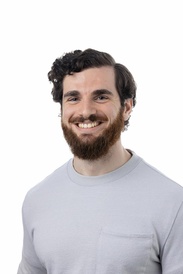
Tiago Marques-Pedro is a PhD student in the MacFarlane lab who studies mitochondrial toxicity. Tiago had the opportunity to organise and co-chair a Gordon Research Symposium. These symposiums, held the day before the main Gordon Research Conference on a particular topic, give early career researchers the chance to present their work in a more informal environment and connect with colleagues at a similar career stage. Hear how Tiago found the experience:
Gordon Research Conference 2025 – Cellular and Molecular Mechanisms of Toxicity
by Tiago Marques Pedro
This past August, I had the chance to return to the Gordon Research Conference (GRC) on Cellular and Molecular Mechanisms of Toxicity (CMMT). Alongside other GRCs, the CMMT is an international forum that promotes the sharing and discussion of leading research across the sciences – in this case, toxicology.
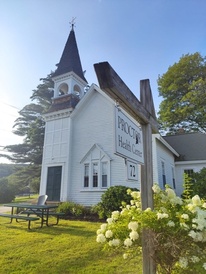
In particular, the CMMT Gordon Research Symposium (GRS) offers an extremely welcoming environment, facilitated by the Proctor Academy found in New Hampshire, USA. This site offers not only a venue for research talks, poster presentations and networking, but a friendly place for interacting with all people across the career ladder within the Toxicology community.
It’s this welcoming environment that led me to not only return to the CMMT GRC, but help to organise this year’s GRS, the seminar portion of the conference for early career researchers. The GRS provides an opportunity for trainees to present their work and interact with other trainees and mentors in a more familiar atmosphere before the main GRC kicks off.
As co-chair, alongside Joanna Woo, we planned the Seminar programme, coordinated funding, reviewed abstracts, liaised with Keynote speakers and tried to not let the stress get to us! With the guidance from the GRC chairs, Karilyn Sant and James (Eric) McDuffie, we managed to uphold the reputation the GRS has in providing engaging and productive sessions.
The main GRC programme offered a host of brilliant speakers and discussions, from new technologies that can be implemented into toxicological research, to innovative models for assessment of clinical endpoints.

A few of my personal highlights included NICEATM’s Kamel Mansouri who sought to promote the democratisation of bioinformatic tools utilising the OPERA software.
Additionally, Joseph Romano provided an extremely informative talk regarding knowledge graphs to improve machine learning model interpretation. Complimentary to the science, we also were able to partake in an array of activities from hiking, swimming and volleyball, another way in which the CMMT GRC helps to foster community. I hope I’ll be able to join once again in 2027!