
Inspiring future scientists
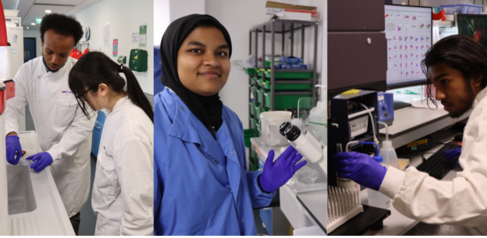
Supporting young people to explore science is a key part of our public engagement programme. Through workshops, school visits and work experience opportunities, we help students develop new skills, gain insight into scientific research and discover the many pathways that science can offer.
By creating opportunities to engage with researchers and experience life within a research institute, we aim to inspire curiosity, raise aspirations and encourage the next generation of scientists, innovators and problem-solvers.
Read on to learn more about our work experience programme, schools’ engagement activities and other opportunities for young people to connect with science.
Work experience programme
Providing first-hand insight into life at a research institute, our work experience programme helps students explore career pathways, develop new skills and discover the many routes into science.
The Unit has a long history of supporting aspiring scientists through work experience opportunities and student engagement initiatives. We were previously a partner organisation in the Aspiring Scientists Training Programme (ASTP), providing students with hands-on experience of scientific research and helping them explore future career opportunities. Today, we continue this commitment through our involvement in the STEMpoint work experience scheme, which connects students with employers across the region and helps widen access to meaningful STEM experiences.
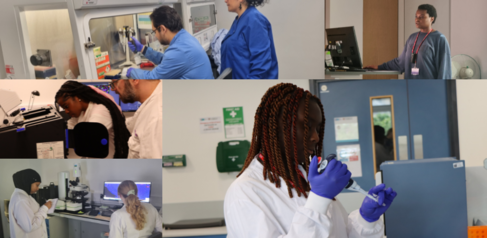
Each year, we host sixth form students for a two-week placement, giving them the opportunity to experience life within a biomedical research institute. Alongside working with researchers and gaining insight into current areas of toxicology research, students also take part in workshops delivered by our specialist facilities and learn about science communication, helping them develop both technical knowledge and transferable skills.
These placements provide an opportunity to meet researchers, explore different scientific disciplines and gain a better understanding of the many roles that contribute to scientific discovery. From laboratory research and data analysis to imaging, communications and professional services, students gain a broader perspective on what a career in science can look like.
Applying for Work Experience
Our main work experience placements are offered through the STEMpoint programme, which manages applications and eligibility requirements. Places are limited and applications are competitive.
Find out more about STEMpoint and eligibility requirements
Students interested in gaining experience at the Unit are also welcome to contact individual research groups directly to enquire about additional opportunities that may be available. Availability varies between groups and cannot be guaranteed.
Whether considering a future in research, healthcare, biotechnology or another STEM-related field, work experience can provide valuable insight into the people, skills and environments that help make scientific discovery possible.
Schools’ engagement
Learn more about the workshops, school visits and outreach activities that help connect students with current scientific research.
School Workshops
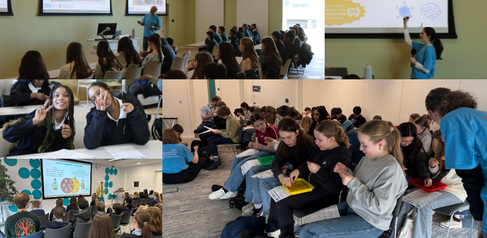
We have developed a growing programme of curriculum-linked workshops that introduce students to areas of research taking place at the Unit. These sessions combine interactive activities, discussion and real-world examples to help bring complex scientific concepts to life.
Current workshop topics include:
- Our immune system and immunology research
- Nucleic acids, proteins and the future of medicine
- Gut microbiome, environment and health
Workshops can be adapted for different audiences from Key Stage 3 through to Key Stage 5, making them suitable for a range of classroom settings and learning objectives.
Several of these workshops have been delivered as part of the Cambridge Festival Schools Programme, but can also be delivered directly in schools and other educational settings.
Visits, Careers Events and Outreach
Alongside classroom workshops, our researchers and staff regularly visit schools to share their experiences and discuss life in science.
Activities include: careers fairs and STEM events, research talks, meet-a-scientist sessions, Q&A discussions and curriculum enrichment activities.
These interactions give students the opportunity to hear directly from researchers, learn about different career pathways and gain insight into the people, skills and experiences that contribute to scientific discovery.
Interested in Working With Us?
By connecting classroom learning with real-world research, we hope to inspire curiosity, build confidence and encourage the next generation to see science as a subject they can explore, enjoy and potentially pursue in the future.
We are always interested in hearing from teachers, schools and educational organisations interested in working with our researchers. We are particularly interested in developing a partnership with specific schools.
Get in touch to discuss workshops, school visits or careers activities:
communications@mrc-tox.cam.ac.uk
Learning beyond the classroom
Explore some of the resources that help students, teachers and curious minds discover our research in their own time.
Science Comics
Our science comics use storytelling and illustration to make complex research topics accessible and engaging for a wide range of audiences. Covering themes such as DNA damage, lung health, fibre toxicity and nucleic acid therapies, they provide a creative introduction to the research taking place at the Unit.
Videos & Research Stories
Our YouTube channel features a growing collection of videos that showcase the people and research behind the Unit's work.
From day-in-the-life features and researcher profiles to public engagement activities and science explainers, these videos offer a behind-the-scenes look at life in a modern research institute.
Continue Exploring
Students can also encounter our research through science festivals, community events, public talks and creative engagement projects throughout the year.