Partnering with communities
Building meaningful relationships with communities is an important part of our public engagement programme. Through partnerships, dialogue and collaborative projects, we create opportunities for researchers and public contributors to learn from one another and explore topics connected to health, research and society.
These partnerships help us better understand the questions, priorities and experiences that matter to different audiences, while creating opportunities for dialogue around research, health and society.
Explore some of the collaborations and initiatives that bring together researchers, public contributors and community organisations.
Public Partnership on Nucleic Acid Therapies
Our Public Partnership on Nucleic Acid Therapies is one of the newest and most exciting developments within our public engagement and involvement programme.
The partnership brings together researchers and people with lived experience to explore the opportunities and challenges associated with next-generation nucleic acid therapies. By creating a space for discussion, shared learning and collaboration, the group helps ensure that patient and public perspectives are considered from the earliest stages of research and strengthens public involvement in the research process.
Working together, members of the partnership explore topics such as communication, accessibility, transparency and the future development of these emerging therapies. The partnership aims to foster mutual understanding, build trust and create opportunities for public contributors to play a meaningful role in conversations around research and innovation.
As the partnership develops, it will support a range of collaborative activities including public-facing resources, co-created communication projects and opportunities for public contributors and researchers to shape the future direction of engagement around nucleic acid therapies.
Talking Together
Talking Together is delivered in partnership with Cambridgeshire Older People's Enterprise (COPE) and brings our researchers together with older members of the local community through a series of facilitated telephone conversations. Originally established by COPE during the COVID-19 pandemic to help combat loneliness, the initiative creates opportunities for people to engage with science in an accessible and welcoming way.
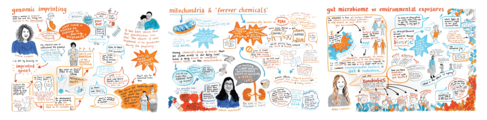
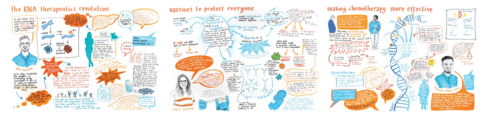
Since joining the programme in 2023, our researchers have delivered two themed series exploring a diverse range of research topics from across the Unit. The first programme, Discoveries for Better Health (2023), included discussions on genomic imprinting and pregnancy, mitochondria and ‘forever chemicals’, the gut microbiome, RNA therapeutics, vaccines and antibodies, and DNA damage, cancer and chemotherapy.
The 2024 programme, Research for Safer Medicines and Environments, explored RNA vaccines, non-exhaust air pollution from tyre and brake wear particles, RNA therapeutics for heart disease, DNA damage and mutational risk, mitochondrial toxicity and artificial intelligence in drug safety, and drug-induced autoimmunity associated with cancer treatments.
Across these weekly conversations, participants are encouraged to ask questions, share their perspectives and explore how scientific research connects to health and everyday life. A unique feature of the project is the collaboration with illustrators to create a visual record of each discussion, capturing key ideas, questions and reflections while creating a lasting legacy of the programme.
Other community projects
Human Bookshelf
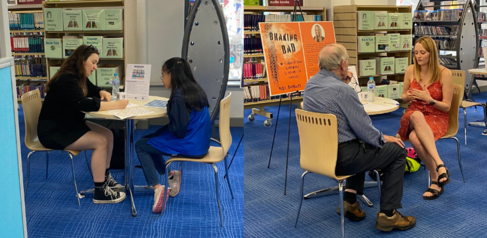
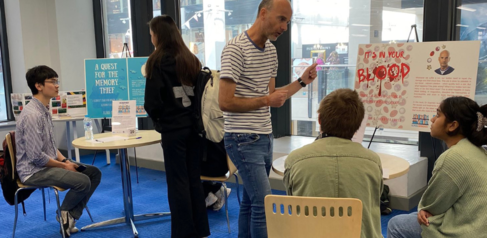
The Human Bookshelf project reimagined the traditional library experience by replacing books with scientists. Visitors could "borrow" a researcher for an informal one-to-one conversation, creating opportunities to ask questions, explore scientific topics in greater depth and discuss the personal stories and experiences that shaped their journey into research.
Developed in 2023, the project was designed to create a welcoming and accessible space for conversations that often aren't possible in busier public engagement settings. By encouraging open dialogue between researchers and members of the public, Human Bookshelf helped break down barriers, challenge assumptions and demonstrate the value of conversation as a tool for public engagement.
Interested in partnering with us?
We are always interested in exploring new partnerships and opportunities to work with community groups, charities, patient organisations, public contributors and other organisations interested in connecting people with science.
Whether you have an idea for a project, would like to involve researchers in an event or are interested in developing a longer-term partnership, we would love to hear from you.
Get in touch:
communications@mrc-tox.cam.ac.uk