
Discover our science
Sharing research with public audiences is at the heart of our public engagement programme. We use a range of creative, interactive and accessible approaches to help people engage with the science taking place at the Unit and explore the ideas, discoveries and technologies that shape our research.
By creating opportunities for people to engage with science in ways that reflect their interests and experiences, we aim to make complex topics more approachable, build understanding and encourage meaningful conversations around research, health and society Whether encountering our research for the first time or looking to deepen their understanding, our activities are designed to make science accessible, engaging and relevant to everyday life. Read on to explore the different ways people can discover and engage with our science.
Festivals and Events
Explore some of the festivals, events and activities through which we share our research with public audiences.
Cambridge Festival
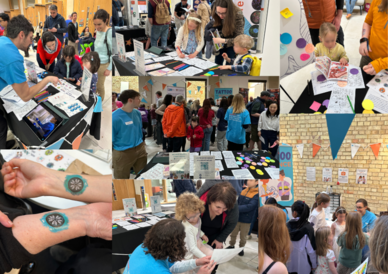
As one of our flagship public engagement activities, Cambridge Festival enables us to connect with families, students and local communities on an annual basis through a diverse programme of activities designed to inspire curiosity and encourage discussion around health, disease and biomedical research.
The Festival has become a cornerstone of our engagement programme, providing a platform to develop new activities, engage diverse audiences and showcase emerging areas of research. We have taken part in the Families Weekend programme since 2021 and, more recently, the Schools Programme since 2025.
Over the years, we have developed activities reflecting the breadth of research taking place at the Unit. Visitors have built their own lungs and looked ‘air pollution’ particles under the microscope, explored a two-metre tactile cell, played microbiome-themed games and embarked on Operation NAT, an interactive challenge to get nucleic acid therapies from discovery to treatment.
Our most popular activity is Tattoo My Science. Developed from an idea originally created by the Gurdon Institute, our researchers design temporary tattoos inspired by their research. These tattoos act as conversation starters, helping visitors learn more about the science behind the designs and the work taking place at the Unit. Many past and current tattoo designs can be found on our Instagram page.
Other Festivals and Events
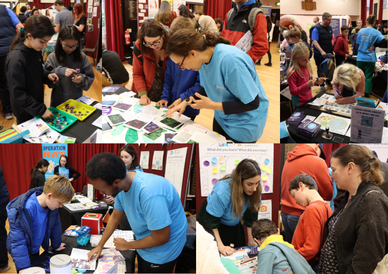
Alongside the Cambridge Festival, our researchers regularly contribute to a variety of science festivals and events locally and across the region. These allow us to reach new audiences, especially those who may not traditionally be exposed to the world of research.
Examples of other festivals our researchers have been involved with include: Norwich Science Festival, Great Exhibition Road Festival, New Scientist Live, Pint of Science, Big Biology Day at Hills Road Sixth Form, Abbey People’s Eager Explorers event, the Royal Society’s Summer Science Exhibition, The Big Bang Fair, the MRC’s Festival of Research and the Leicester Riverside Festival.
If you are organising a festival, community event or public engagement activity and would be interested in working with us, please get in touch at communications@mrc-tox.cam.ac.uk.
Creative Engagement Projects
Explore some of the creative projects that have helped bring our research to life through illustration, printmaking and storytelling.
Science Comics
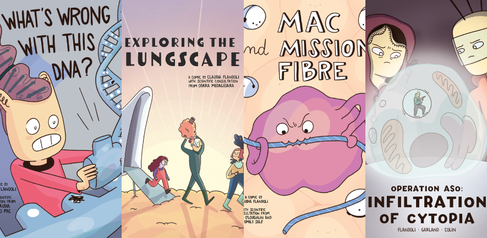
Our science comics use storytelling and illustration to transform complex research into accessible and engaging adventures. Created in collaboration with scientific illustrator Claudia Flandoli, the series explores topics ranging from DNA damage and lung health to fibre toxicity and emerging nucleic acid therapies, helping readers of all ages connect with the science behind our research. The collection includes downloadable and printable comics, colouring resources and translated editions, helping audiences around the world engage with the science behind our research.
Explore our science comics collection.
Toxicology in Print
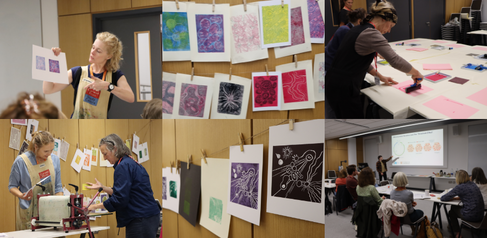
Toxicology in Print was a collaborative science-art project developed in partnership with the Curwen Print Study Centre. Across a series of five printmaking workshops hosted at the Unit, members of the public explored cutting-edge toxicology research through a combination of scientist talks, laboratory tours and hands-on creative practice.
Each workshop featured a different researcher and area of research, including air pollution and tyre wear particles, the gut microbiome, RNA therapeutics, immunotoxicity and drug-induced liver injury. Participants were introduced to the science behind each topic before creating their own artworks inspired by scientific images, data and discoveries using techniques such as drypoint, linocut, cardboard cut and TetraPak printmaking.
Alongside learning new artistic techniques, participants had opportunities to meet researchers, ask questions about their work and gain a behind-the-scenes insight into life at the Unit. The project encouraged the public to interpret research through a creative lens, generating new conversations and perspectives on the science behind health, disease and medicine. The resulting artworks provided a unique public interpretation of our research and highlighted the value of combining scientific and creative perspectives.
Science Communication and Digital Engagement
Alongside our festivals, events and creative projects, we also engage audiences through public talks, videos and digital platforms, helping people connect with our research beyond the lab.
Public talks
Researchers from across the Unit regularly contribute to public talks, panel discussions and community events, sharing their expertise on topics ranging from environmental exposures and disease mechanisms to emerging therapeutic technologies.
Videos
Our YouTube channel features a growing collection of videos showcasing the people, research and activities that make up the Unit. From research explainers and day-in-the-life features to public engagement projects and event highlights, there are plenty of ways to explore our science online.
Follow our science
Looking for a more informal way to engage with our research? Follow @mrc.tu on Instagram, where we share fun and educational content designed to spark curiosity about science and showcase public engagement activities from across the Unit.
For the latest news, research updates and announcements, follow us on LinkedIn and Bluesky, where we share developments from across the Unit and opportunities to connect with our researchers.