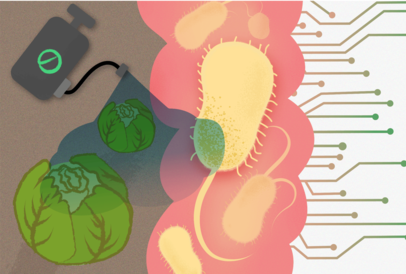

Researchers in the Patil Lab have used a lab-based screening to identify over 150 common industrial chemicals, from pesticides to flame retardants, that have a toxic effect on bacteria found in the healthy human gut microbiome.
We are exposed to many different chemicals in our modern world including pesticides and herbicides sprayed on food crops and industrial chemicals used in flame retardants and plastics. These chemicals are likely to enter our bodies through food, water, and environmental exposure. Standard chemical safety assessments do not consider the human gut microbiome because chemicals are formulated to act on specific targets, for example insecticides should target insects.
The human gut microbiome is composed of around 4,500 different types of bacteria, all working to keep our body running smoothly. When the microbiome is knocked out of balance there can be wide-ranging effects on our health including digestive problems, obesity, and effects on our immune system and mental health.
Very little information is available about the direct effects of environmental chemicals on our gut microbiome, and in turn our health. To address this the Patil group conducted a large-scale laboratory screen to test the effect of 1076 chemical contaminants on 22 species of gut bacteria.
They identified 168 chemicals that are toxic to bacteria found in the healthy human gut. These chemicals stifle the growth of gut bacteria thought to be vital for health. Most of these chemicals, likely to enter our bodies through food, water, and environmental exposure, were not previously thought to have any effect on bacteria. The types of chemicals that had the greatest anti-gut bacterial activity were fungicides and industrial chemicals.
Read the full story here on the University of Cambridge Website.